
A feature film that normally takes two years will be finished in about one.
Marty Lang, an assistant professor in the new Creative Media Production concentration, used ChatGPT, Copilot, and an AI pre-production tool to adapt a script, plan a 12-day shoot, and give students a full feature film to work on in the concentration’s first semester.
By AI Hub Team
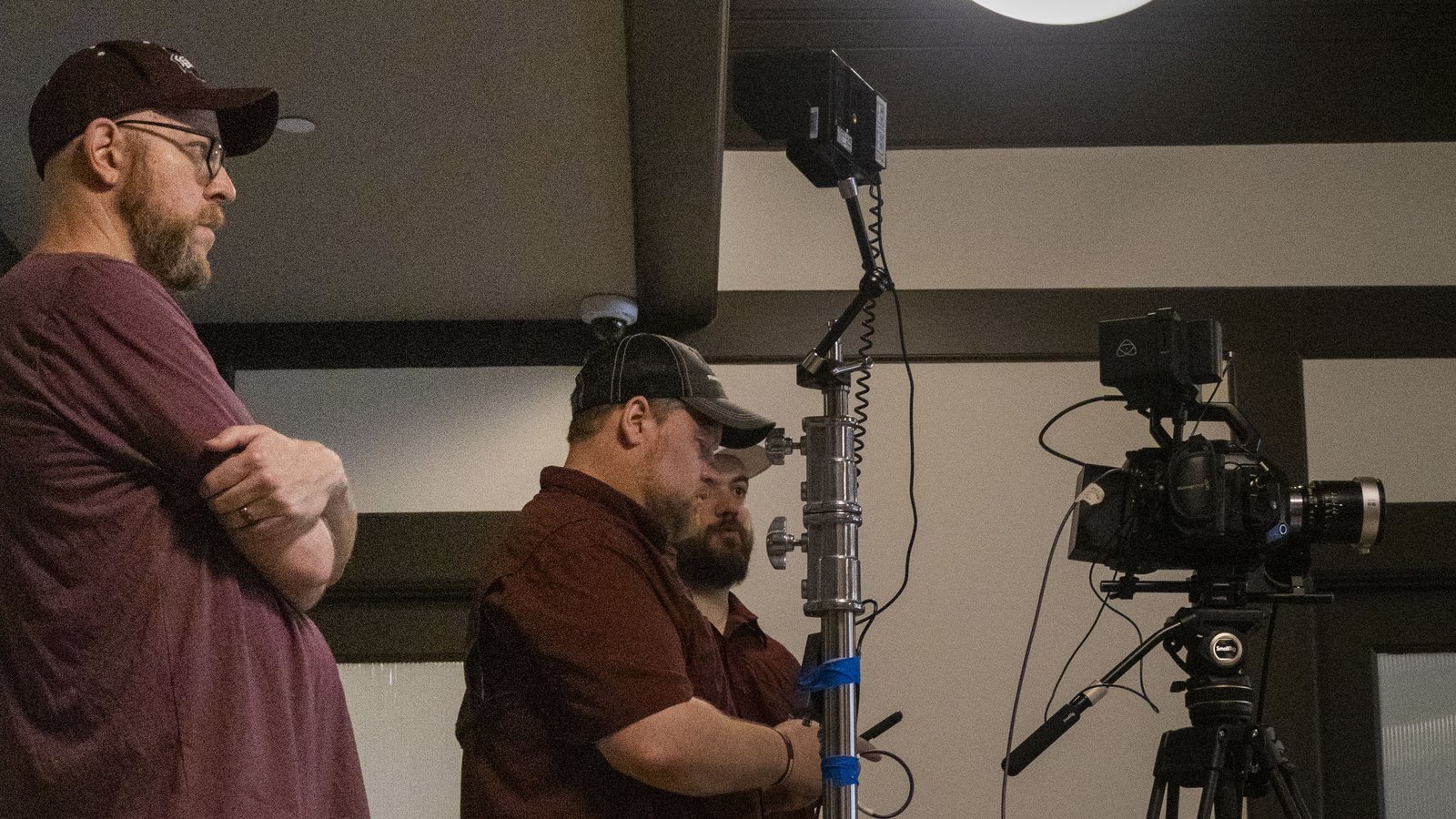
Marty Lang was hired a year ago by the Department of Communication, Media, and Theatre to help build the Creative Media Production concentration, which is enrolling its first students this fall. He has worked in independent filmmaking for almost 25 years as a writer, director, producer, editor, and actor, and before coming to Mississippi State he directed the graduate film program at the University of Georgia. The concentration’s first project is Ten Year, a 90-minute feature film shot over a Maymester course. The title Ten Year is a play on the word tenure, appropriate for a film that tells the story of a college film professor. Students earned credit working on the crew and in the cast, four MSU faculty members worked alongside them, and the production ran 12 days, opening with a one-day script read-through and filming for 11 days.
The project came together last December. Lang had a script he wrote years earlier in California and thought he could reset it in Starkville, but he had only been in town a few months. He uploaded the script to ChatGPT and later Copilot and asked for suggestions on how to work Starkville landmarks into the story, which is how the production ended up filming at Oby’s. He also asked Copilot to analyze the script’s structure. It came back with a list of suggestions, “not writing it for me, but pointing out things that could be improved.”
Once the script was ready, Lang used FilmPro, an AI-assisted pre-production tool built by two filmmakers and coders in Atlanta. Before a film shoots, someone has to break the script down scene by scene and list what every scene needs, from the set and characters to wardrobe, hair and makeup, visual effects, and stunts. Building that document normally takes a week to two weeks, and FilmPro produced a first version in five minutes. Lang read through the result and corrected what needed correcting. He then used the same tool to build a shooting schedule in about ten minutes, work that ordinarily takes weeks, and that schedule is what allowed a small crew to move quickly. The production averaged 8 to 10 pages of script a day with students who had never been on a film set.
Lang is beginning to use AI in post-production as well. When the crew shot outside locations recently, the drill field was nearly empty, so rather than schedule a reshoot, he plans to run the footage through Runway, a video-to-video generator, and ask it to add students walking through the frame. Other parts of the film are handled by people. A composer is writing the music, and the team has a colorist, though they plan to test AI color grading against his work. Lang is also a student at Curious Refuge, an online AI filmmaking school, where he recently took a workshop on AI copyright and legal clearance. The tools a production uses can affect whether the finished work can be copyrighted, so if the team wants to sell the film, they have to carefully document what they did and which tools they used at each step.
“It allows you to iterate so quickly,” he says. “As a storyteller, the phrase I always hear is that you want to be moving at the speed of thought. We’ve never had a tool like that before.” He sees the same opening in the classroom. When you teach a skill that AI can do, he says, you teach students the traditional way to do it first, then let them use the tool on their own projects, which gives them more time to be creative. He is teaching AI in Creative Media Production next year, one of three AI courses now in the department.
He knows the caution around this. Colleagues from his time at Georgia spent decades in Hollywood on films budgeted at up to a hundred million dollars, and the new tools worry them. “This scares them. It doesn’t scare me,” he says. The most expensive film he has worked on cost about half a million dollars, and at that scale the tools mean he can plan beyond his resources. “Hollywood has been an invitation-only business for a long time,” he says. “This will help accelerate the end of that.”
One more day of filming is set for the end of September, editing will run through the end of the school year, and the film should be ready for festivals and a campus screening next year. “We’re kind of figuring this out as we go,” he says, “because nobody’s ever done this.” Asked what he would say to a colleague who has been thinking about AI but has not tried it, Lang’s message is clear. “You don’t need to be scared. If you are creative in your thinking, AI can be a wonderful complement to any kind of educational program.”